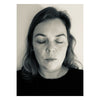


Six by Six: The Human Figure in Contemporary Cornish Painting.
Curated by Dr Matt Retallick.
Projects Twenty Two.
Artists: Samuel Bassett @_samuelbassett - Emma Digerud-White @emmadigerudwhite - Alice Kilpatrick @alicekilpatrickart - Marie-Claire Hamon @marieclairehamon - Jethro Jackson @jethrojackson- Andrew Litten @andrew_litten_artist
On the surface, this is a simple exhibition: six paintings by six Cornish artists at different stages of their careers, brought together in a single space. Yet because the figure has long occupied an uncertain position within Cornish art, this modest presentation carries a greater significance. What appears straightforward becomes, paradoxically, a quiet but pointed statement about the place of the human figure within Cornwall’s artistic tradition, and about what it means to return attention to the body in a visual culture that has often looked elsewhere.
When we think of Cornish art, we often think of dramatic seascapes, rugged coastlines, abstraction, and the clean lines of modernism. Cornwall’s artists have long been captivated by its land and sea, and with good reason: the peninsula oHers a meeting point between elemental forces, shifting weather systems, and a distinctive coastal light that has shaped generations of painters. Yet the people who live, work, and move through these environments have often remained at the margins of the picture, appearing only as traces, silhouettes, or brief interruptions within broader atmospheric studies.
This has not always been the case. Artists who once made Cornwall their home, including Henry Scott Tuke (1858–1929), Stanhope Alexander Forbes (1857–1947), and Laura Knight (1877–1970), placed the human figure at the centre of their work. In their paintings, people are embedded within landscape: accepted, integral, and inseparable from the places they inhabit. Figures bathe, labour, rest, and observe; they are not additions to the landscape but part of its structure and rhythm. As the twentieth century progressed, however, the figure began to occupy a less certain position.
Cornish art became increasingly associated with formal experimentation, abstraction, and subjective responses to place. Against this backdrop, the sustained commitment to figuration shown by artists such as Karl Weschke (1925–2005), Roger Hilton (1911– 1975), and Partou Zia (1958–2008), in their varying degrees, appeared increasingly out of step with prevailing artistic concerns. Their focus on the human figure could seem unfashionable, even resistant, at odds with dominant ideas about what Cornish art had apparently become.
In recent years, however, attention to these artists has been renewed, accompanied by a broader resurgence of figurative practice among artists living and working in Cornwall. This interest is not simply retrospective; it reflects a shift in contemporary visual thinking. In a world that often feels increasingly distant, digital, AI-driven, and saturated with images, many artists are turning once again to the human form as a means of reestablishing proximity to lived experience. The figure offers not only a subject but also a method: a way of understanding surroundings through embodiment, gesture, and relational presence. In doing so, it restores people to landscapes from which they have too often been absent, not as a nostalgic return, but as a renewed inquiry.
Seen in this light, the six paintings gathered here are more than a set of individual works. Together, they suggest a renewed confidence in the figure as a vital subject within contemporary Cornish art. They remind us that Cornwall is not only a place of dramatic coastlines and celebrated light, but also one of human lives, labour, and encounter: realities that continue to shape both the landscape and the art it inspires. At the same time, the works resist any simple return to realism. Although a physical figure is present in each painting, there is also a persistent sense of inwardness, ambiguity, and transformation. Cornwall, after all, is a place where mythology and folklore feel embedded within the land itself, as though memory and geology are indistinguishable.
In A Prayer (2026) by Alice Kilpatrick, we see a figure with clasped hands, their haloed hair suggesting a veil of protection, concealment, or historical continuity. Although the landscape emerges only at the narrow edges of the composition, its presence is palpable, as if pressing inward from beyond the frame. The bodice, articulated through rhythmic hatching, recalls both the textures of the natural world and the marks of human intervention upon it: the scarring of earth, the carving of stone, the repetition of labour. The figure’s gaze is contemplative and deeply at ease, evoking a quiet interiority and a sense of unspoken dialogue with what surrounds them. A comparable stillness is explored by Jethro Jackson in Tide of Silence (2026), where a fisherman is absorbed in ritualised work.
Here, Jackson presents a weather-worn fisherman sorting his catch with the ease of long-practised muscle memory, the glint of a fish’s eye catching the same yellow tone as his overalls. Though his broad, masculine frame suggests hardness, his gestures reveal something gentler: the quiet attentiveness with which his cat approaches him, expecting food, companionship, and care. Beyond this intimate exchange, the silvery sea remains present, calling for performance and for the assumption of a public role shaped by tradition. Yet in solitude that performative hardness loosens; the figure is allowed to soften, and to exist outside expectation.
That sense of transformation is also evident in Samuel Bassett’s Changing Figure (2024). Here the human form becomes unstable, as though caught in an out-of-body state, shifting between presence and dissolution. The body seems to merge with its surroundings, resisting fixed identity. The use of orange references the Bassett family fishing boats, suggesting continuity amid change, both personal and communal, within Cornwall itself. A coral sky evokes sunrise and sunset at once, compressing beginnings and endings into a single suspended moment. The painting lingers in this condition of flux, where identity, memory, and landscape continually blur into one another.
In Together at Valkyrie Octopus (2024), Emma Digerud-White presents two reclining figures overshadowed by a vast light-blue form pressing inward from the upper left, as though poised to engulf them. The title shifts between mythological and marine associations, while also referencing a sculptural installation by the artist Joana Vasconcelos. Within a Cornish context, however, the work becomes entangled with local visual memory: the looming atmospheric density of Karl Weschke’s Pillar of Smoke (1964), the constant presence of the sea, and weather that is not simply observed but felt as physical force. The painting holds tension between intimacy and engulfment, shelter and exposure.
A similar tension emerges in Andrew Litten’s In the Field (2024), where a figure moves through a landscape that feels both familiar and hallucinatory. The face appears to dissolve, while duplicated arms suggest motion caught mid-gesture, as though the body cannot fully stabilise. Behind the figure stands a bull, its presence echoing the primal contours of cave imagery, lending the scene an archaic charge. A sweeping path suggests escape or passage, yet a closed gate interrupts this movement. What initially appears open resolves into quiet claustrophobia, where freedom is imagined but not fully accessible.
Fecund (2023) by Marie-Claire Hamon offers a more enclosed, inward composition, though its title gestures towards abundance, fertility, and generative force. A kneeling figure appears in quiet contemplation before symbols of life-giving energy: plant forms, bodily references, and vegetal growth. Rather than presenting fertility as spectacle, the painting frames it as attentiveness, a slowing-down in which human presence is absorbed into cycles of emergence, renewal, and embodied continuity.
Seen together, these six paintings suggest that the figure in Cornish art is neither absent nor resolved, but persistently in negotiation with its surroundings. What emerges is not a single narrative, but a shared attentiveness to presence: to bodies that observe, labour, dissolve, and transform within landscapes that are at once physical and mythic. The human form becomes a site where personal memory, local histories, and elemental forces converge, resisting any easy separation from sea, land, and weather. In revisiting figuration, these artists do not reject Cornwall’s modernist inheritance; they extend it, restoring intimacy, ambiguity, and vulnerability to its visual language. The result is a renewed understanding of Cornwall not only as place, but as lived and continually unfolding experience.
www.projectstwentytwo.co.uk